
Room directions
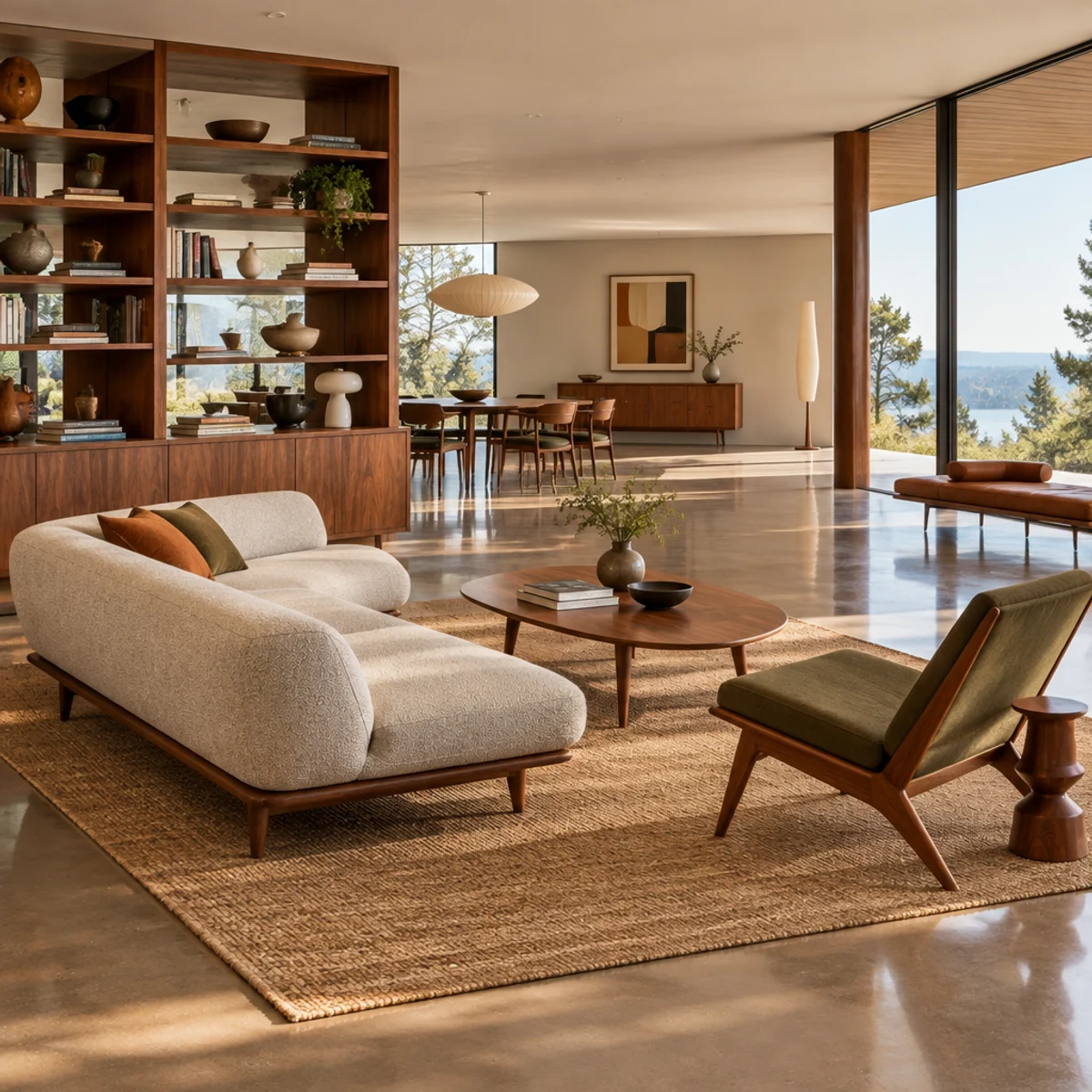
Mid-century modern interiors
Low profiles, tapered supports and warm timber organize a calm room.
Interior design
Compare the forms, materials and details that give a room its character.
Start with a room direction, then look more closely at its furniture and surfaces.
7 visual directions · Generated examples
Room directions
Low profiles, tapered supports and warm timber organize a calm room.
Room directions
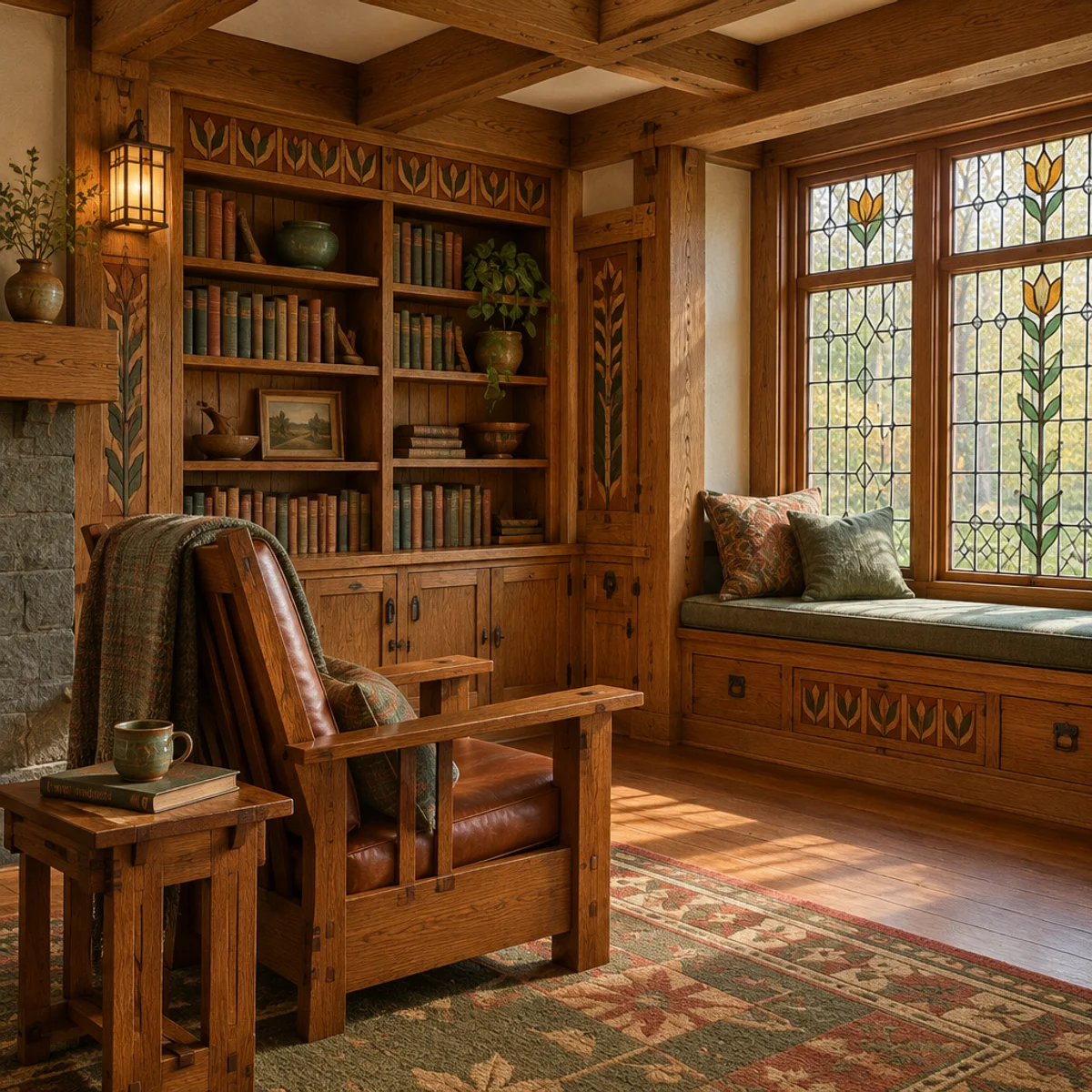
Joinery, wood grain and built-in details give the space its structure.
Room directions
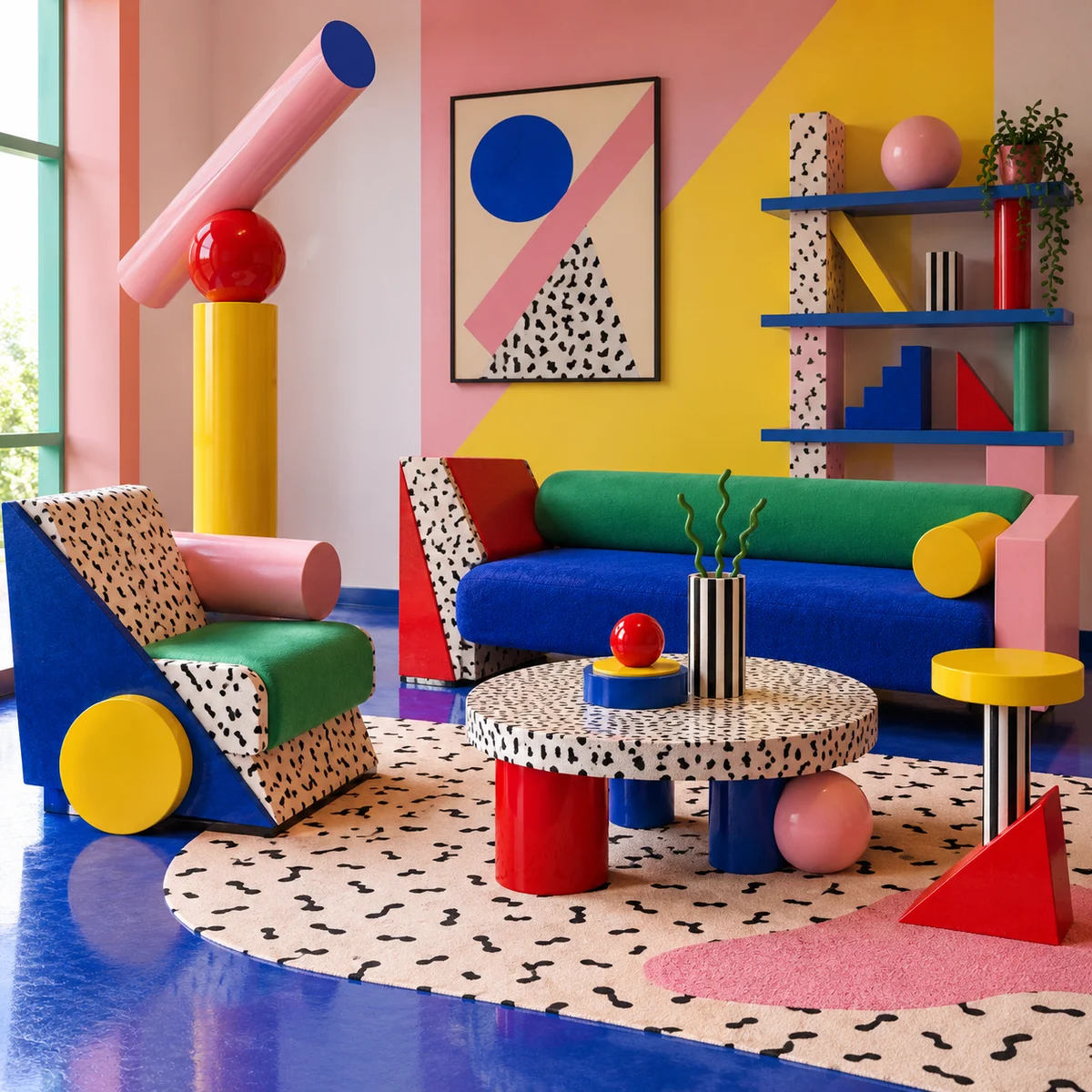
Contrasting patterns and sculptural furniture establish an energetic rhythm.
Room directions
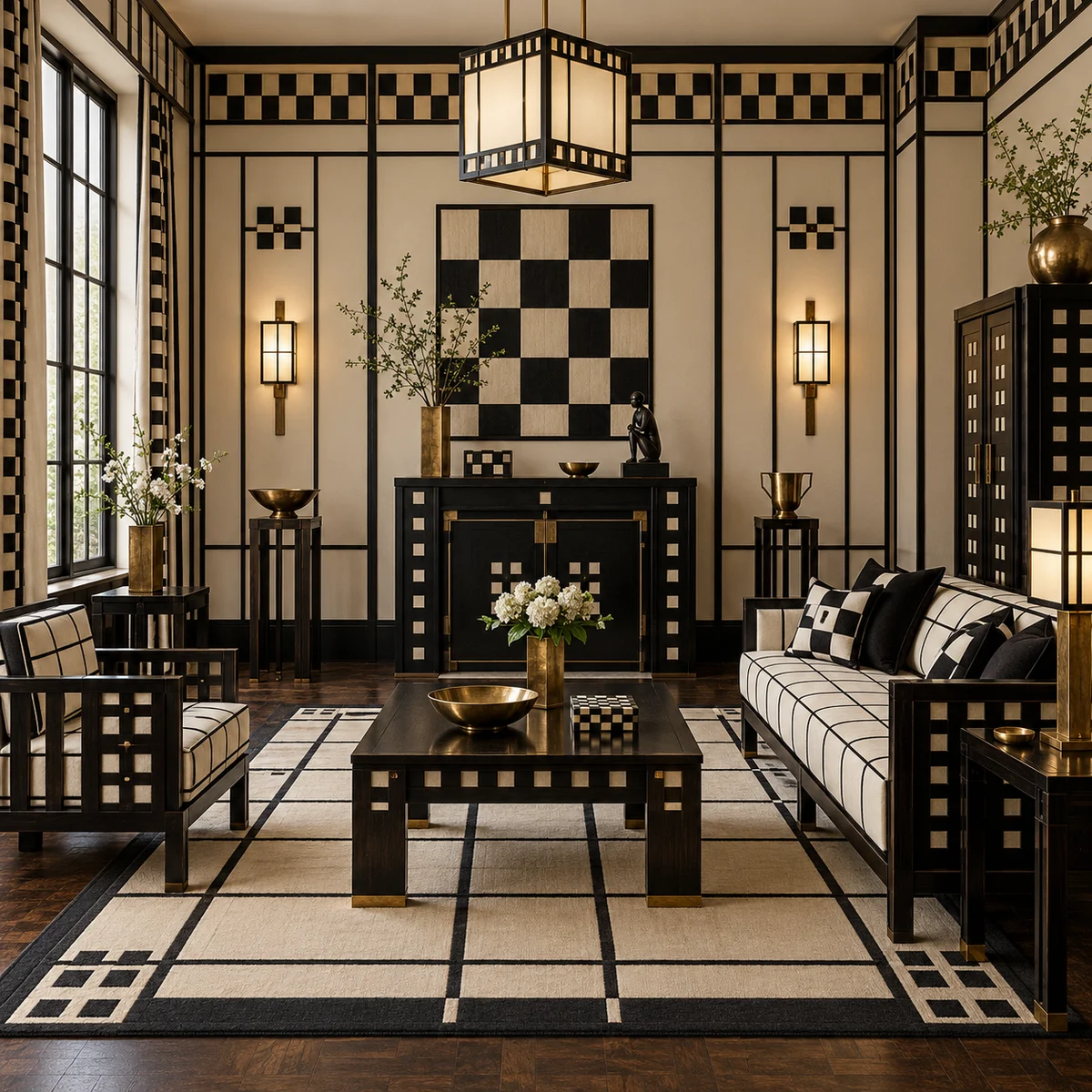
Vienna Workshop total-design interiors unite disciplined square grids, geometric furniture, patterned textiles, and handcrafted fittings into one coordinated visual language.
Room directions
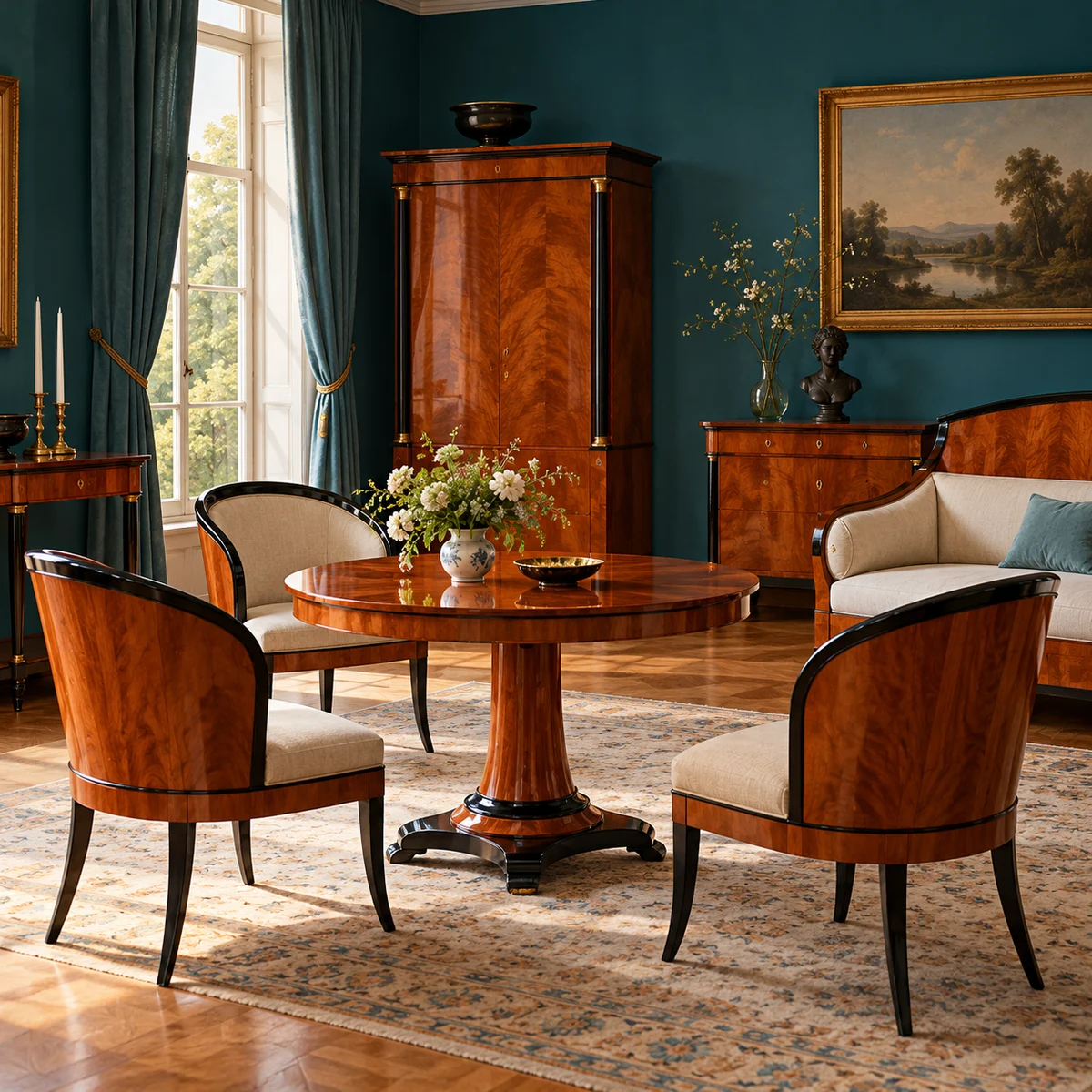
Early-19th-century Central European interiors pair clean-lined light wood veneers and dark framing strips with comfortable upholstered seating and strong wall or textile colours.
Furniture & architectural details
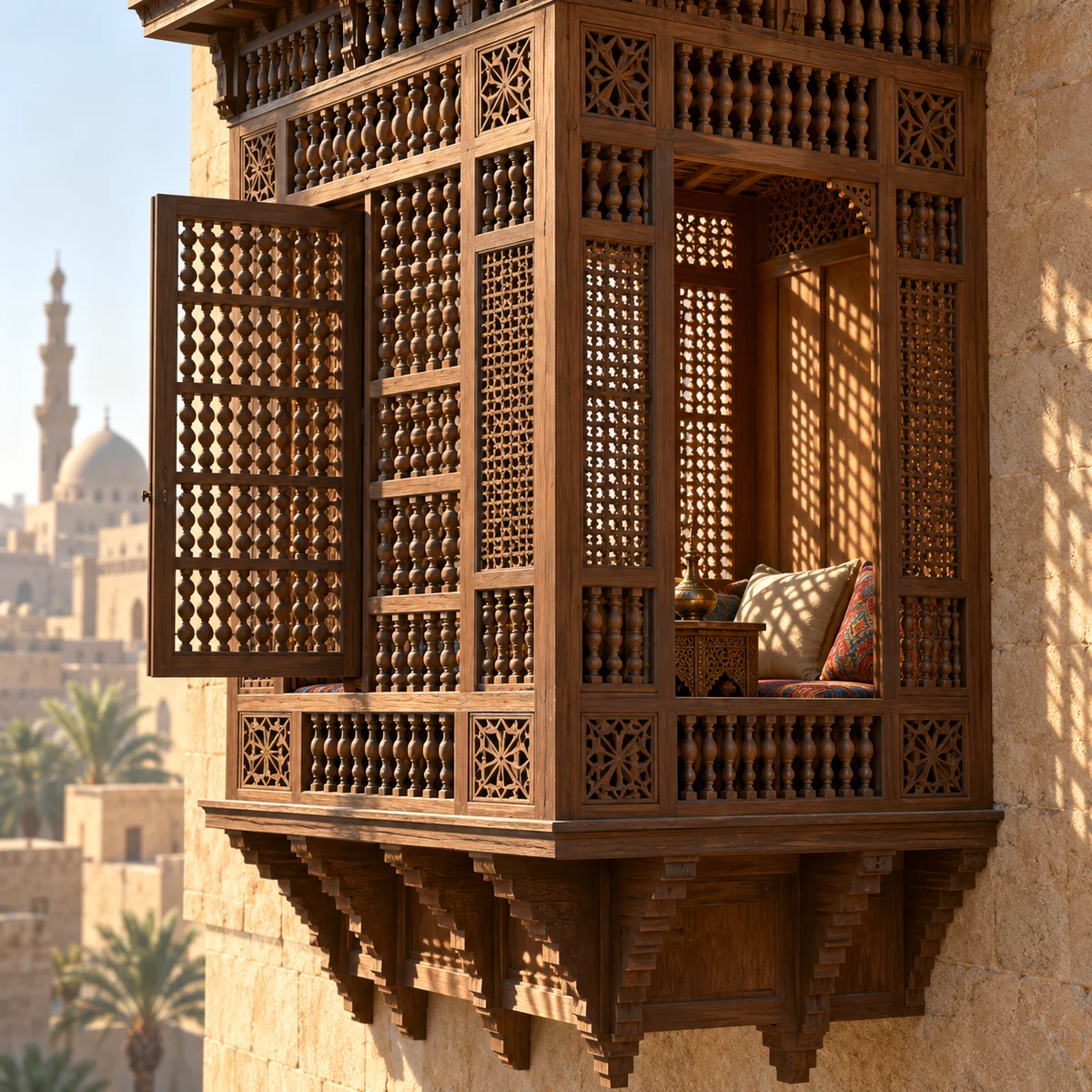
Turned wooden lattice filters daylight into intricate patterns of light and shade.
Furniture & architectural details
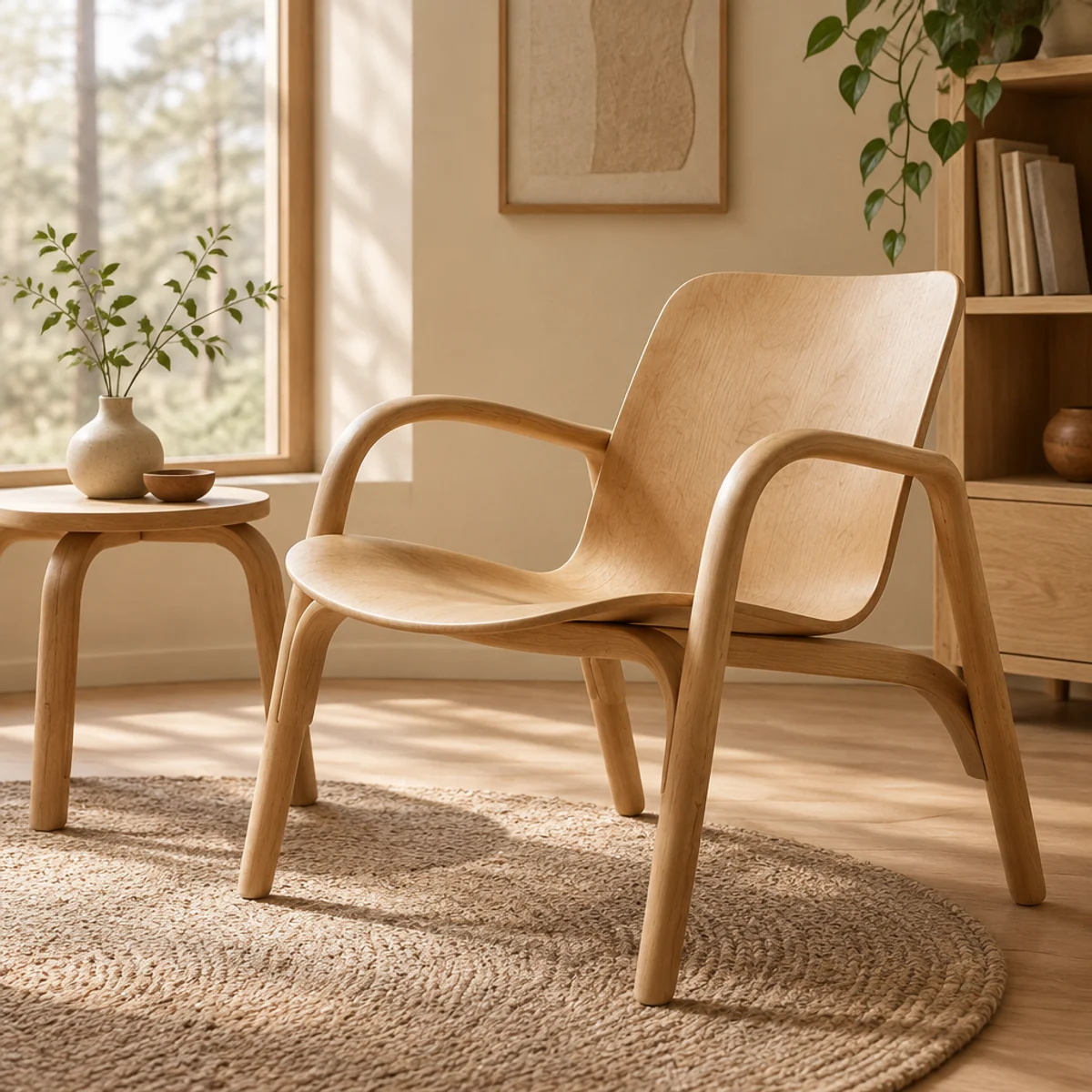
Curved timber and expressive joints offer a closer look at the furniture within a room.
Mid-century modern uses open space, low profiles and warm wood. Arts and Crafts emphasizes timber joinery and crafted surfaces. Memphis builds rhythm through bold geometry, pattern and contrasting forms.
Visual concepts. Dimensions, furniture fit and lighting performance need separate evaluation.