
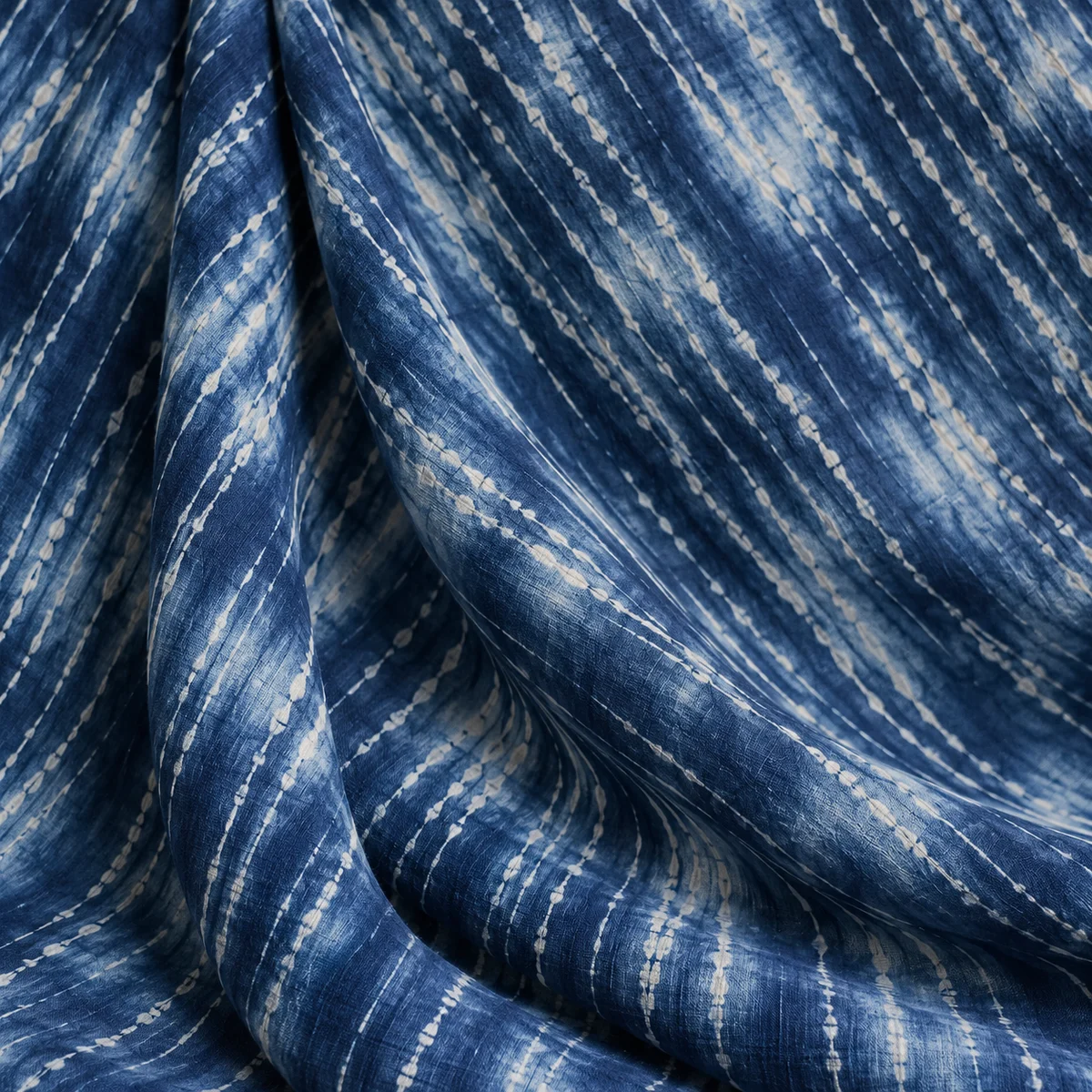
Arashi shibori
Pole-wrapped Japanese resist dyeing produces rain-like diagonal streaks, narrow pale binding marks, and irregular dye transitions across the woven cloth.
Make
Arashi shibori textile study with dense rain-like diagonal resist streaks, fine irregular pale binding lines, and softly diffused indigo edges on woven cloth. Drape one broad fabric panel so the directional pattern and textile surface remain clearly visible.
A starting point: add your own subject or details in your image tool.
Copy this visual direction into an image tool; you can pair it with your own subject.
A generated textile interpretation. Actual wrapping, dye chemistry, weave specification, and repeatability are not demonstrated; this is not a seamless fabric repeat.
About this aesthetic and its examples
Compare more directions
Explore other approaches for this kind of project.
Look closer: traits and nearby styles →
About this example
This image may have used extra directions. The seed above is a reusable starting point and may produce a different result.
- Created with
- image_gen__imagegen
- Model
- Not exposed by tool
- Generated
- 2026-10-16
Original text-only AI-generated example. Built-in imagegen model identifier and cost were not exposed. Public seed plus recorded square-image presentation instructions; no reference image or retouching. Source reduced for the 1200px display export. Full aspect ratio preserved; 640px centre-crop thumbnail. Direct assistant visual review only, not human review. A generated textile interpretation. Actual wrapping, dye chemistry, weave specification, and repeatability are not demonstrated; this is not a seamless fabric repeat.
How to use this promptRead as Markdown
A directional resist pattern
Rain-like diagonal streaks and pale interruptions carry the pattern across the cloth. In arashi shibori, wrapping and binding cloth around a pole shape the resist pattern; the image explores the resulting directional appearance.
Compare the broad fabric fold with the suspended lightwell curtain. The curtain changes the spatial application while keeping the diagonal rhythm visible. The images do not document a dyeing process or supply a repeat-ready textile specification.
Look closer at Arashi shibori
Pole-wrapped Japanese resist dyeing produces rain-like diagonal streaks, narrow pale binding marks, and irregular dye transitions across the woven cloth.
In the original generated example: An indigo arashi shibori fabric panel with dense diagonal resist streaks, pale binding marks, and a broad hanging fold. Notice which details catch your eye before deciding whether the whole style is for you.
Ask yourself: is it the palette, the surface, the shapes, or the subject you like? Save a favorite and use the visual taste guide to find a useful next direction.