
Skeuomorphism
Digital interfaces borrow the materials, shapes and control cues of physical objects: paper tabs, wooden drawers, tactile knobs and inset or raised controls.
Make
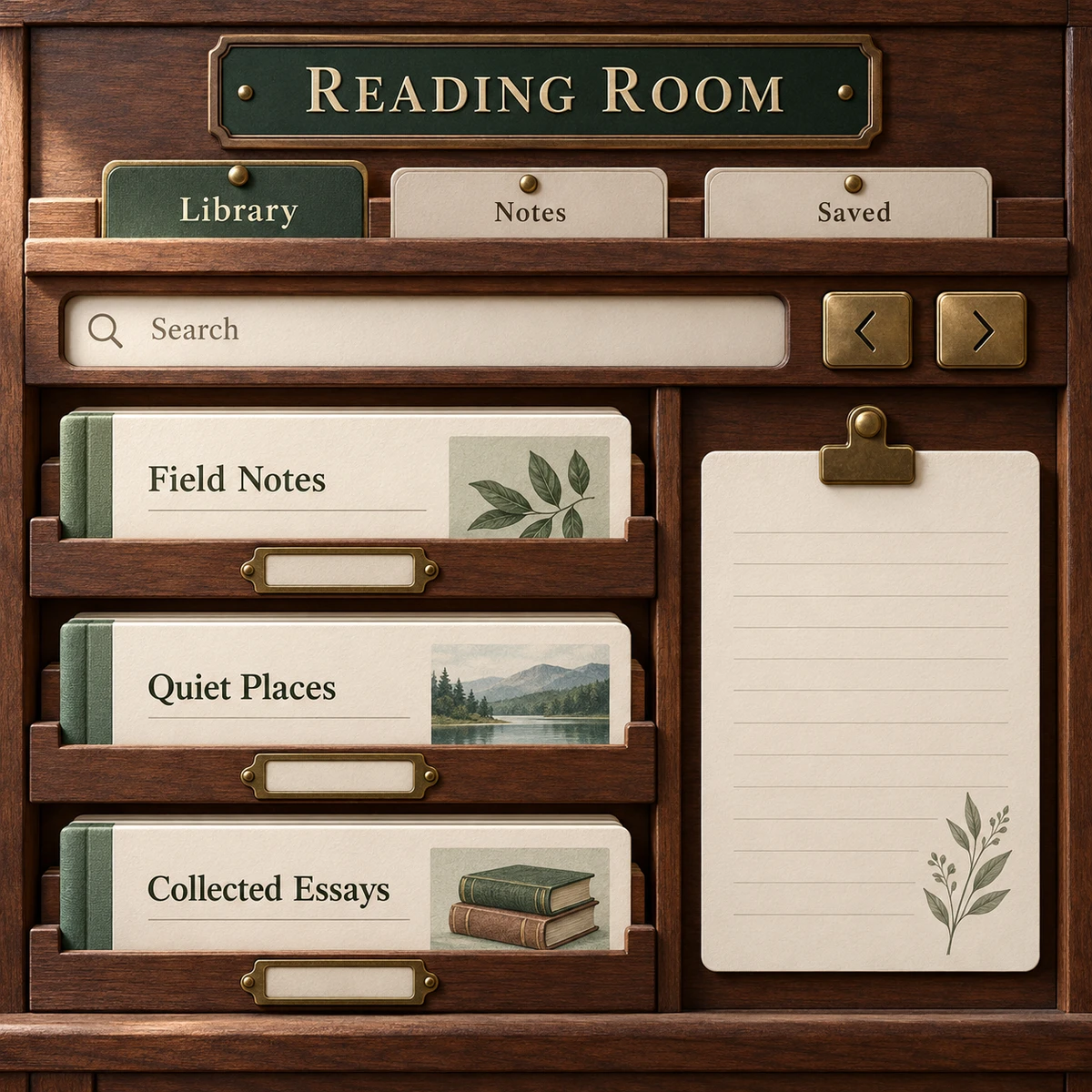
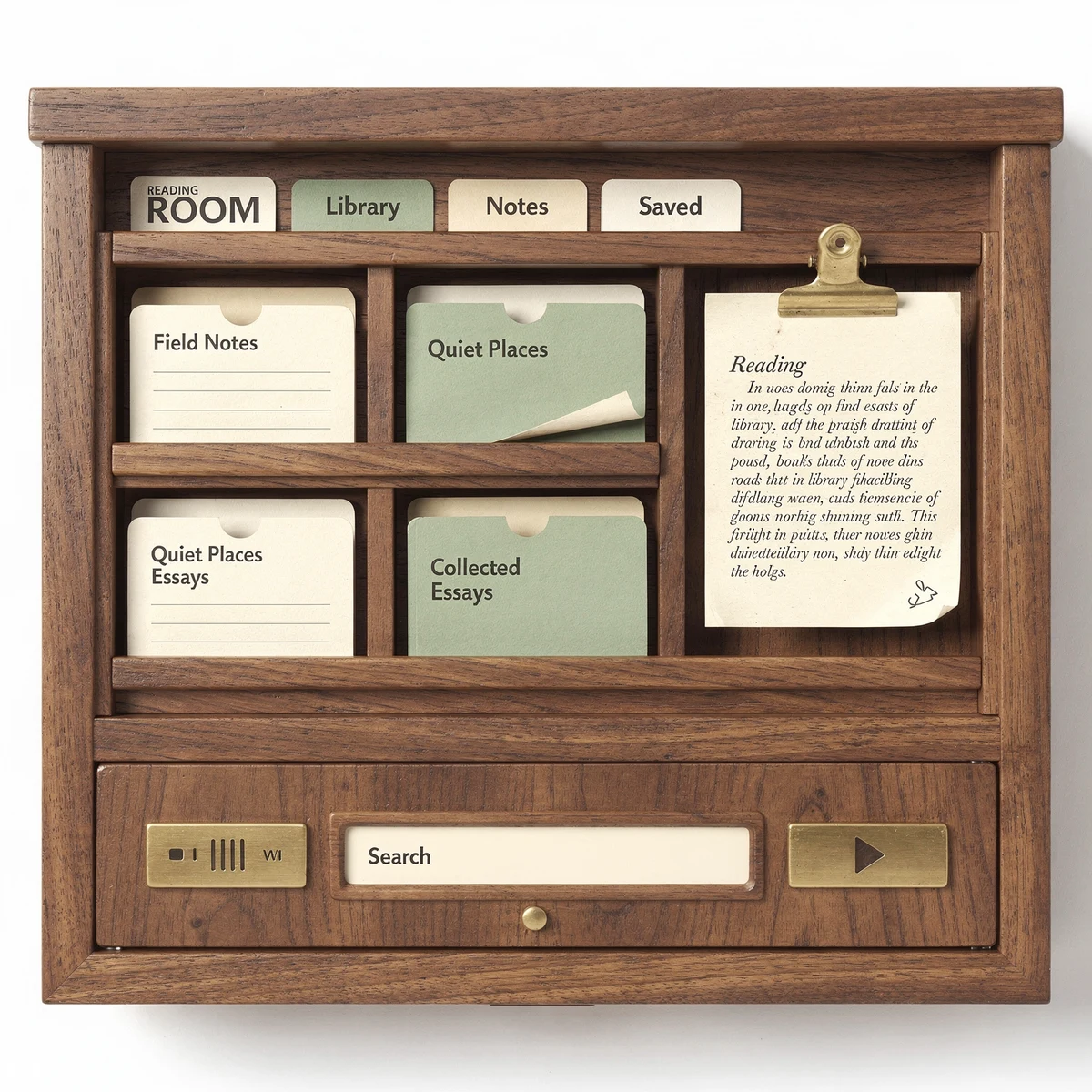
Skeuomorphic interface design with controls modeled on physical objects, tactile material textures, inset and raised surfaces, and directional light that makes the control hierarchy clear.
A starting point: add your own subject or details in your image tool.
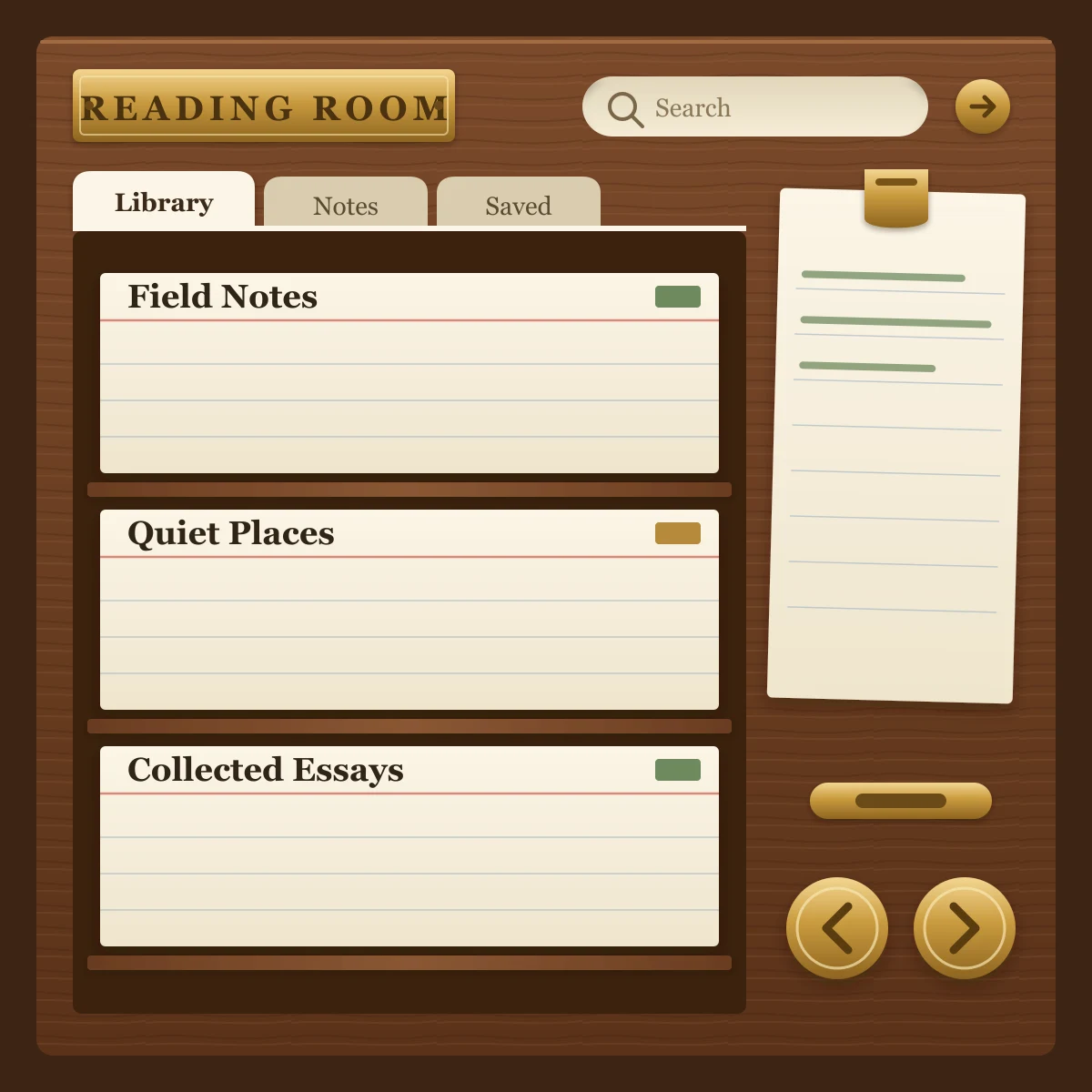
A generated webpage concept uses a card-catalog metaphor. The music-player variant explores the same aesthetic through audio equipment.
Visual inspiration only: the interface has not been implemented, accessibility-tested or usability-tested.
About this aesthetic and its examples
Compare more directions
Explore other approaches for this kind of project.
Look closer: traits and nearby styles →
About this example
This image may have used extra directions. The seed above is a reusable starting point and may produce a different result.
- Created with
- Built-in image generation (image_gen__imagegen)
- Model
- Not exposed by tool
- Generated
- 2026-10-25
Original AI-generated example for the October 25 search-content release. Physical index tabs, inset search field, raised brass controls and layered paper/wood surfaces communicate a coherent filing metaphor. Required short fictional text is legible. A webpage concept distinct from the preserved audio-player variant; no vendor marks or signature. Exact model and cost were not exposed. Requested 2048px; tool returned 1254×1254px, resized to 1200px and 640px WebP. Public seed plus recorded sample art direction; no claim that the seed alone reproduces this image. No human visual review.
View model alternatives · Compare results →
How to use this promptRead as Markdown
Same prompt · Different tools
Skeuomorphism
Physical control details, material textures and depth.
Prompt
A physical metaphor, across different interfaces
Skeuomorphism gives a digital interface cues borrowed from familiar physical objects. A card tab suggests filing; an inset control suggests a recess; a knob suggests turning. Material texture works best when it reinforces the purpose and hierarchy of the controls.
The original example explores a library webpage through paper cards and wooden drawers. The music-player variant uses knobs, switches and analog meters instead. These are applications of one aesthetic. A wearable watch could use another physical metaphor without becoming a separate style.
These images are design concepts. Their appearance does not establish that a control works, that a label is accurate, or that an interface is accessible. Compare skeuomorphism’s recognizable objects with neumorphism’s softer raised and inset surfaces.
Learn more: Nielsen Norman Group: mental models and skeuomorphism
Look closer at Skeuomorphism
Digital interfaces borrow the materials, shapes and control cues of physical objects: paper tabs, wooden drawers, tactile knobs and inset or raised controls.
In the original generated example: A fictional library webpage using wooden card drawers, paper index tabs, inset search and raised brass controls. Notice which details catch your eye before deciding whether the whole style is for you.
Ask yourself: is it the palette, the surface, the shapes, or the subject you like? Save a favorite and use the visual taste guide to find a useful next direction.