
Botanical cyanotype: describe the silhouette, surface, and space.
A complete visual prompt, two actual generated examples, and a small comparison that shows why one changed phrase is hard to evaluate in isolation.
Cyanotype is a photographic process associated with Prussian blue. Botanical photograms can leave pale plant impressions against the blue paper. The V&A’s photographic-process guide and MoMA’s cyanotype glossary explain the physical technique. The examples below are AI interpretations of that appearance.
The complete prompt
Cyanotype-style botanical study print with deep Prussian-blue field, pale contact-print silhouettes of fern fronds and seed heads, soft tonal transitions, and subtly mottled absorbent paper texture; close-up arrangement with layered botanical negative space and luminous white highlight voids, retaining the classic cyanotype contact-print aesthetic.
Select and copy the text above, or use the Copy prompt button on the catalog example. This trial used the seed exactly as written, without extra subject instructions or a reference image.
Three visual details to look for
- Silhouette and field: pale botanical shapes against deep blue, including lighter and darker overlapping impressions.
- Negative space: the blue gaps between the stems and fronds help define the arrangement.
- Surface and exposure: mottled paper-like texture and softer ghost shapes distinguish the image from a flat blue vector illustration.
A one-phrase comparison
For B, we replaced only pale contact-print silhouettes
with blue botanical illustration
. Everything else in the submitted text stayed the same. Each prompt was generated once in a separate call.
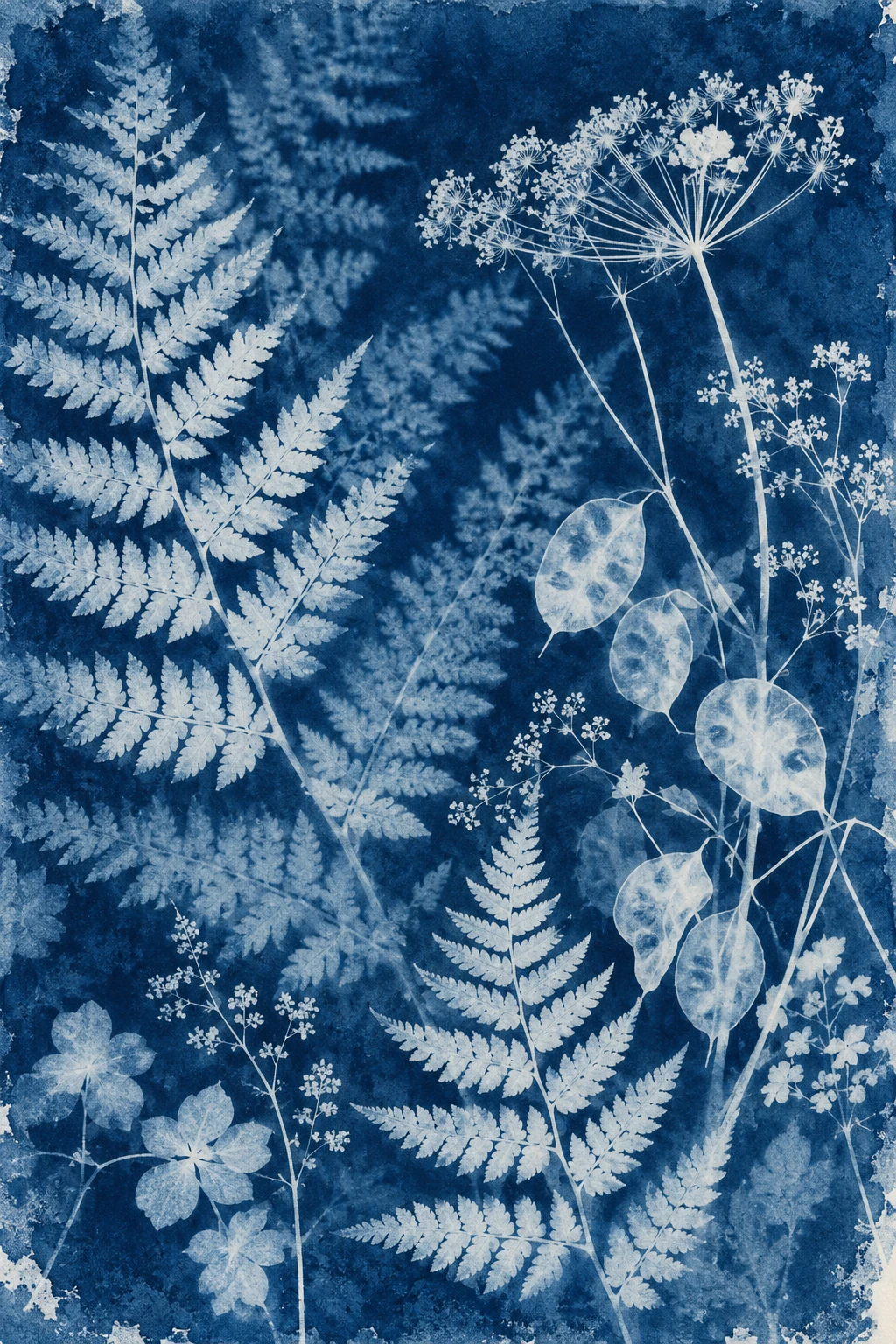
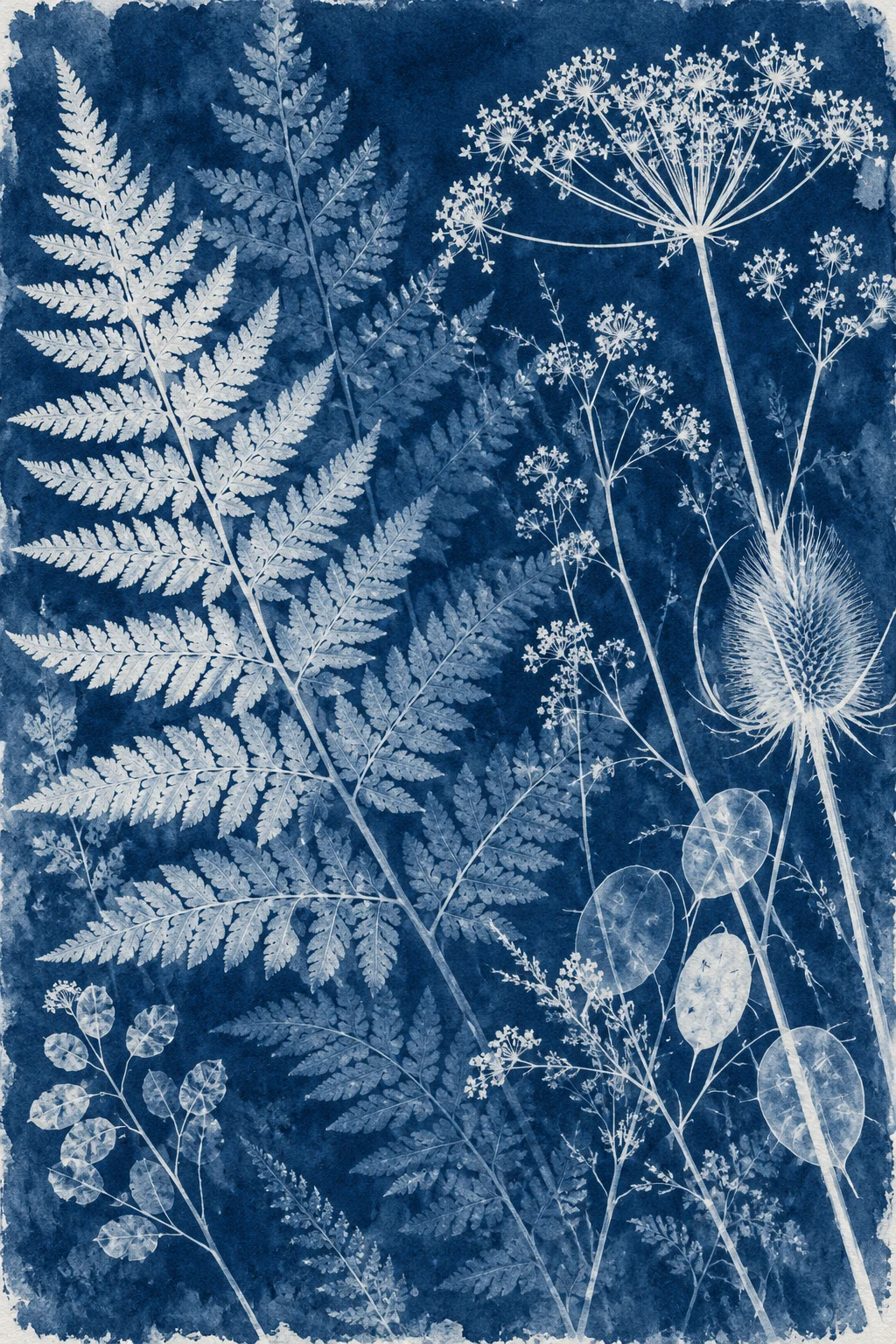
What happened: both outputs retained the pale-on-blue visual language. The remaining words still ask for a cyanotype-style print, luminous white highlights, and a contact-print aesthetic. The changed phrase did not override those instructions in this sample.
What this does not establish: the different plant placement or added shapes cannot be attributed to the phrase change. These are two stochastic outputs, without an exposed random seed or repeated trials. One usable result demonstrates an example, not dependable performance across tools.
The exact B prompt
Read and copy the comparison prompt
Cyanotype-style botanical study print with deep Prussian-blue field, blue botanical illustration of fern fronds and seed heads, soft tonal transitions, and subtly mottled absorbent paper texture; close-up arrangement with layered botanical negative space and luminous white highlight voids, retaining the classic cyanotype contact-print aesthetic.
How to make your own comparison useful
Keep the same image tool and settings, change one instruction, and retain every output. Compare several generations of each version. Decide beforehand what you will inspect: silhouette polarity, amount of open blue space, or texture. If you want to isolate one phrase, first check whether other wording is asking for the same effect.
These illustrations are neither physical prints nor reliable botanical identification references. The generator can invent plant forms. Textured edges and soft outlines here are visual effects; they do not prove a real exposure or printing process.
About these examples
Created October 15, 2026 (America/Edmonton; October 16 UTC), using the built-in image generation tool. Its exact model identifier and random seed were not exposed. No reference images were submitted. Originals were converted to WebP without cropping, resizing, or retouching. Both outputs were visually inspected by an AI assistant; no human review or cross-model evaluation is claimed.
The older catalog image used additional directions. A above is a separate exact-seed trial; it does not replace that image or its historical provenance.